If you don’t know this about me yet, cricket is an integral part of my life. I am really keen about the history of the game and religiously spend time researching and writing about it. This was also how Cricket Field Chronicles came into existence in 2021 and if you share the passion, you can explore my work here.
In my quest for the same, I like to visit places which enlighten me about it. The Galle cricket stadium has been on my bucket list for quite some time. It is one those stadiums which is not just picturesque but also holds a lot of history and landmark cricket moments. This is the ground where Muttiah Muralidharan, the highest wicket-taker in Test Cricket, chose to play his final Test match. And on that very ground, on that very day, he claimed his 800th wicket. If that doesn’t make a place sacred, I don’t know what does.
So when I was planning my trip to Srilanka, I knew I had to include Galle in my itinerary, just so that I can visit the stadium. That no active cricket match was scheduled during that came as a disappointment but I am well aware that you don’t get everything that you dream or wish for.
The Galle cricket stadium sits right adjacent to the Galle Fort and Indian Ocean. At the entrance, you are greeted with the Board that shouts “Galle Cricket Club” along with the banners of “One Team, One Nation”, that happens to the official slogan for the National Cricket team.
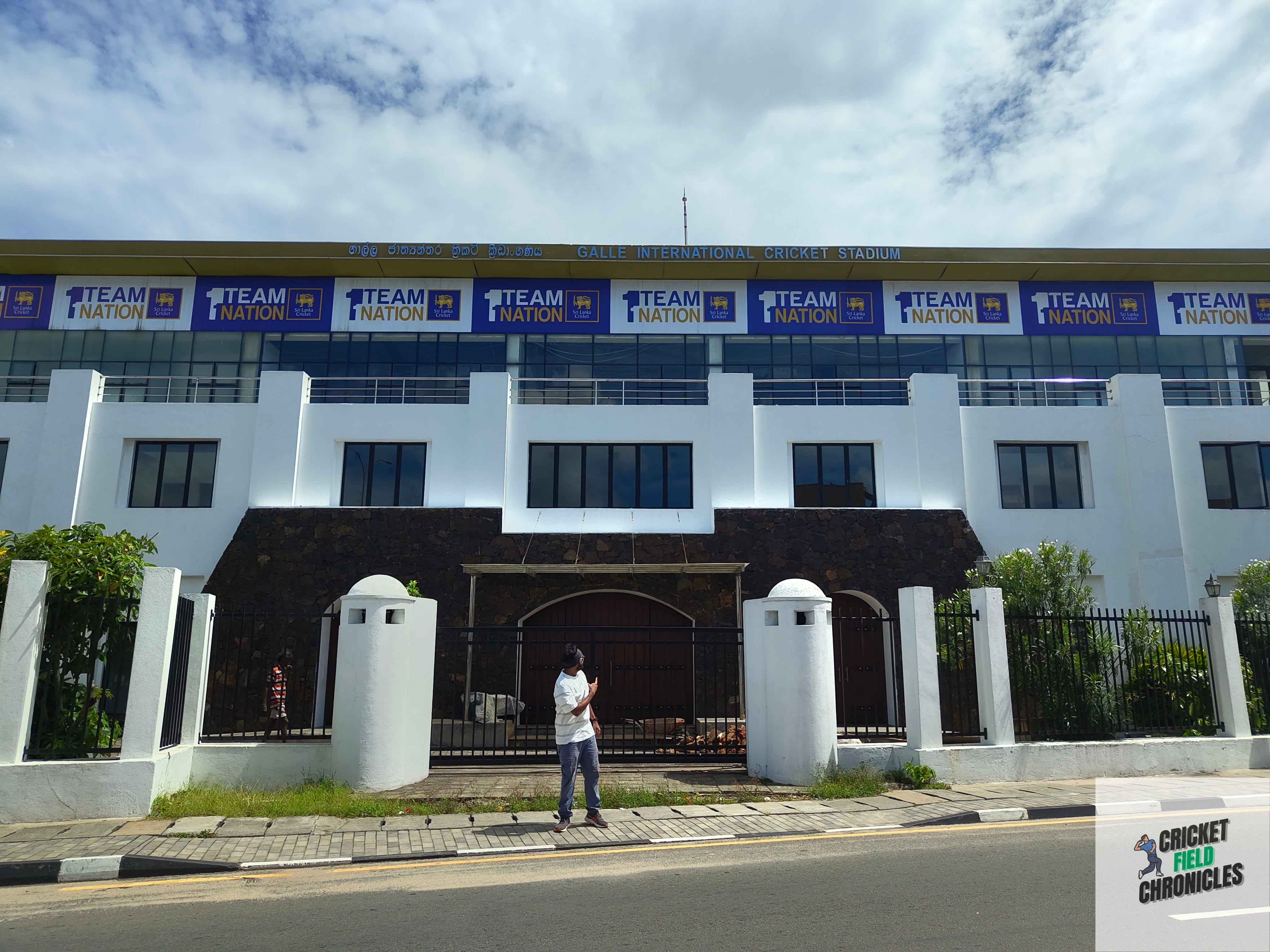
I was not allowed entry into the stadium and understandably so. Why would they let a random tourist enter the stadium? I was determined though. I begged and pleaded. I told them I am from India and it was important for me to see the stadium. It was important. I have dreamt of it for so long.
The administrator saw through my pleadings. A simple dressed man with a moustache and curly hair, he was probably a cricket fanatic like me. He looked at me, took a few seconds pause and then gave a half smile before allowing me a quick 5-minute visit, albeit with a guard present.
I dropped my backpack and ran towards the entrance. A small, narrow and dimly lit path lead to the ground. Picture the many back angle shots in a sports movie. Where a coach or a player is exiting a tunnel into the stadium. It felt exactly like that. Only that I had the ground empty and no arousing cheers of my name.
I entered the ground. There was a knee-level fence guarding the ground. For a change, it was good to see a stadium that didn’t feel like jail. That didn’t create boundaries between the players and the viewers. No cricket was happening but I could feel and imagine the thrill of watching a Test match here in such close proximity and with a UNESCO World Heritage in the background.


The stadium hosted its first test in 1998. No major alteration could be done to the stadium at it stands in the vicinity of a UNESCO World heritage site. The stadium was terribly damaged during the 2004 Tsunami and was rebuilt with the help of Surrey Cricket Club and cricketers Shane Warne and Ian Botham.
Stadium That Doesn't Feel Like a Prison
Even with all the new additions, it remains a small-capacity stadium. But I was not complaining. I like to watch my cricket in peace, without the hullaballoo and in company of people who understand the game. Galle International Stadium checked them all.
The ground in itself was not very huge, unlike today where we are witnessing a maniac race to build large capacity stadiums just so that more and more people could be fitted in. While I support the idea that they allow for more fans to experience the game from the stadium, they are a big disappointment in terms of operations and logistics. Fans don’t get basic services like water, food and cleanliness. In a 90,000-seat stadium, cricket becomes a spectacle you watch on a screen thirty rows away. Here, you could theoretically hear the ball hit the bat before the sound reaches you.


The stadium houses two Pavilions - Mahindra Rajapaksa Pavilion and the Galle Cricket Club Pavilion. The Mahindra Rajapaksa Pavillion was constructed in 2006 and is named after the Sri Lankan President. The stadium’s location allows for fan to catch a glimpse of the action not just from within the stadium itself but also from top of the Galle Fort, which offers breathtaking views of the action.
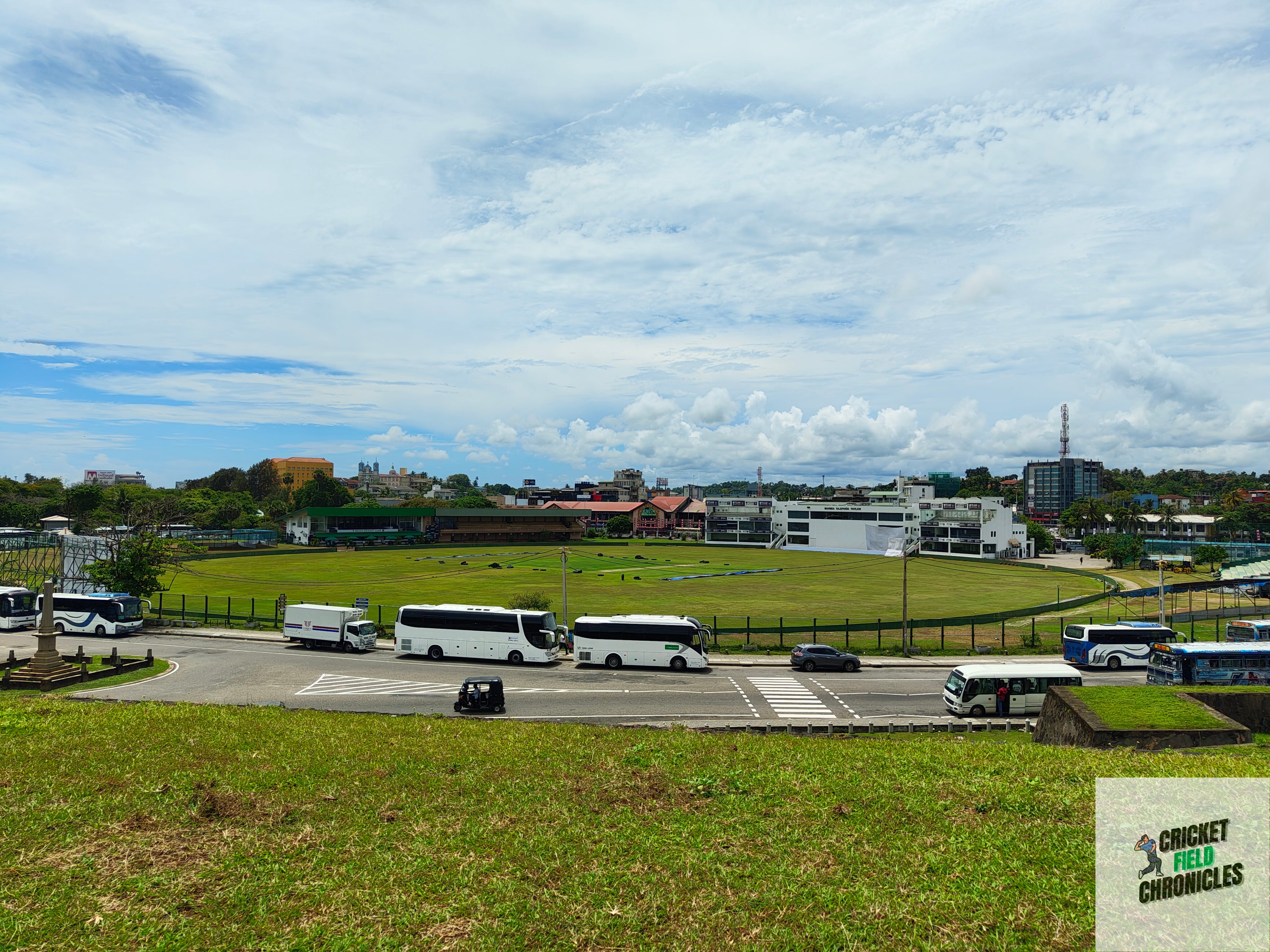
Despite being hot, close proximity to the ocean allows for the cool breeze to flow through the stadium. The sky was gloriously blue. I wanted to stay longer but my five minutes were over. The administrator was kind enough to not interfere in my overstay, allowing me take back happy memories. I took a last glance at the stadium and promised it that I will be back one day to catch Test match proceedings. I hope it remembers me when I do.
Maybe consider buying me a cup of coffee?
While everything on CFC is free to read, we have been a reader-supported platform since the beginning. Your support helps me sustain this dream and to keep researching, writing, and traveling to cricket grounds to bring you stories that matter.
New Story Drops Every Wednesday!
In this blog, I unearth forgotten gems, celebrate historical triumphs, and explore the finest literature from the world of cricket.
If you find these stories meaningful, or if they show you why cricket is important on and off the field, consider sharing them or subscribing.
More Stadium Diaries:
The Kotla Experience

India and Australia. Top two ranked teams. Delhi. Fortress since 1987. Hosting a Test after 6 years. The hype is real. I am not a big admirer of the archaic stadium, grappling with outdated architecture and less than pleasant facilities. But it’s a Test match. I make it a point to not miss.
You May Also Like:
Want to Read More of My Writing?
I also write newsletters about travel and food. If you are looking for travel ideas and itineraries or just want to read fascinating travel stories, you should consider following Backpack Chronicles by clicking the buttons below: