Wasim Akram mastered arguably the toughest known skill in cricket - swing bowling. More so reverse swing. Today’s generation might not understand its beauty and gravity. Or The lethality of it. Because they don’t see it anymore. Almost on the verge of extinction, swing along with seam bowling is singlehandedly responsible for keeping intact the balance between the bat and the ball. It was beauty, grace and thrill combined, ball after ball. If Sachin’s straight drive had the power to stop time, so did Akram’s swingers. Who can forget the way he set up Rahul Dravid during Pakistan’s tour of India in 1999. It was the work of a genius.
But how was this genius made? Sultan brings to life the journey of the world’s greatest left-arm fast bowler. The bowler who made the ball and the batter dance to his whims. It’s a story that needed Akram to drop his guard and he does that. To a certain extent. It is no surprise that the performer who came to be regarded as the Sultan of Swing chose to title his memoir Sultan.
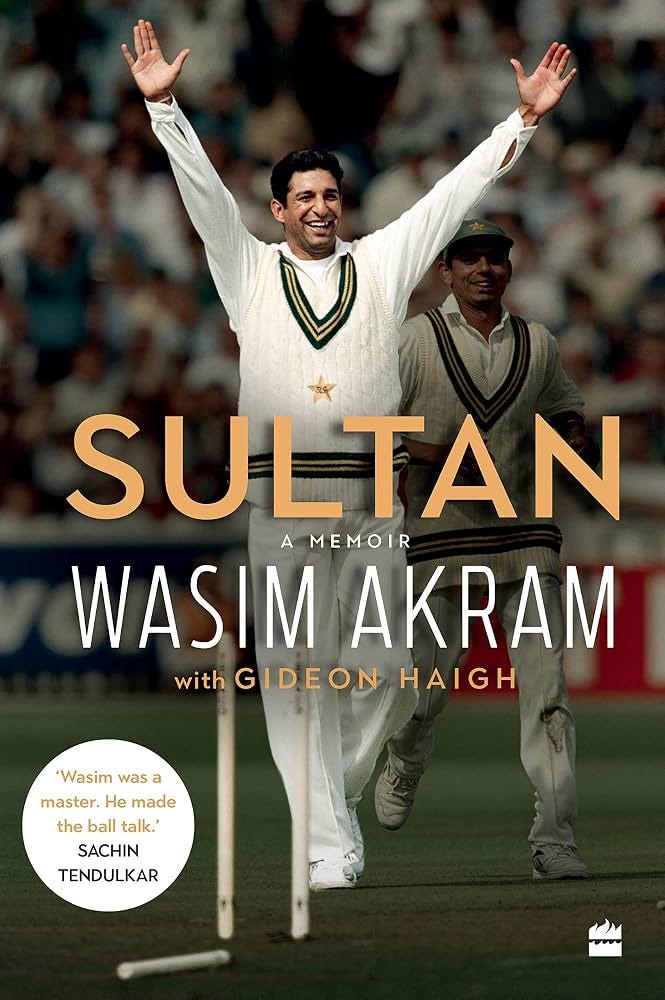
The memoir is deep and has Akram shedding light on his battle with Diabetes, cocaine addiction, ball-tampering, match-fixing and much more. In one chapter, he shares an incident where some players of the Pakistan team were arrested but later released for allegedly smoking marijuana during their tour of West Indies in 1993. Autobiographies tend to be cagey. But honesty here is welcome.
Collaborating with Gideon Haigh is a winning move. The Australian writer, known for his candid and electrifying cricket writings, keeps the narrative anecdotal to keep the readers engaged. It is also to Haigh’s credit we get to read and know about personal facets of Akram’s life as well as the troubled functioning of Pakistan cricket.
Akram’s admiration for his captain, guide and mentor, Imran Khan runs as a theme throughout the book. The 1992 WC win was a special moment for Pakistan cricket and so is Akram’s evocative description of it. He also stakes a claim of being a successful all-rounder, one which makes for a delightful read. The book sheds light on the cricket culture in Pakistan, which is one of its highlights.
Fast Bowling is a human body-defying activity. And when certain individuals take it a notch higher, you are itching to know more about it. This is where my major disappointment with the book lies. It feels a wasted opportunity to enlighten the fans about the intricacies of fast/swing bowling. There is so much to know about the process, action development or how to keep innovating with age and time to stay relevant and menacing. Akram only manages to touch to the tip of the iceberg.
The memoir is rich in anecdotes. But I found issues and themes to be disproportionately addressed. Additionally, not all chapters captivate you equally which hampered my reading experience. Despite its flaws, Sultan makes for a good read for its genre. It has a carefully crafted balance between story and statistics. It is not perfect but carries honesty and courage to tell the story Akram wishes to tell.
A worthy addition to your bookshelf.
My Rating:
3.5/5
New story drops every Wednesday!
In this blog, I unearth forgotten gems, celebrate historical triumphs, and explore the finest literature from the world of cricket.
If you find these stories meaningful, or if they show you why cricket is important on and off the field, consider sharing them or subscribing.
Consider buying me a cup of coffee?
While everything on CFC is free to read, we have been a reader-supported platform since the beginning. Your support helps me sustain this dream and to keep researching, writing, and traveling to cricket grounds to bring you stories that matter.
The Game You Know, Stories You Don’t!
Find your next cricket read:
Want to Read More of My Writing?
I also write newsletters about travel and food. If you are looking for travel ideas and itineraries or just want to read fascinating travel stories, you should consider following Backpack Chronicles by clicking the buttons below: